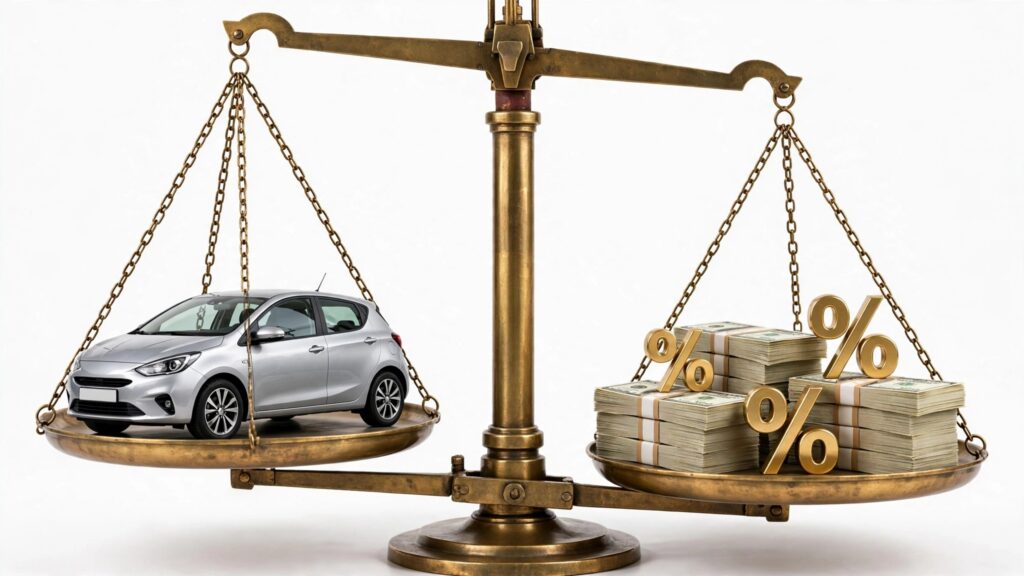
Loan-to-value ratio doesn’t come up in casual car-buying conversations nearly as often as monthly payment or interest rate, yet it’s one of the more important numbers determining both whether you’ll qualify for financing at all and how exposed you are if something goes wrong with the vehicle early in the loan term, before you’ve built up much genuine equity in it.
What Loan-to-Value Ratio Actually Means
Loan-to-value ratio, often abbreviated LTV, compares your loan amount to the vehicle’s actual value. A $24,000 loan on a car worth $30,000 represents an 80 percent LTV. A $28,000 loan on that same $30,000 car represents a considerably higher LTV, closer to 93 percent, reflecting less equity cushion and more risk from the lender’s perspective if the vehicle needs to be repossessed and resold at any point during the loan term.
Why Lenders Care So Much About This Number
A higher LTV means the lender has less protection if you default and the vehicle needs to be sold to recover the outstanding loan balance, since vehicles depreciate over time and a resale might not cover the full remaining loan amount at a high LTV. This is exactly why lenders often cap the maximum LTV they’ll approve, sometimes requiring a down payment specifically to bring the ratio down to an acceptable level before approving the loan at all.
How LTV Connects to Being Underwater on a Loan
Being underwater, or upside down, on a car loan means you owe more than the vehicle is currently worth, a situation directly tied to a high starting LTV combined with a vehicle’s natural depreciation curve. A new car financed with little to no down payment can become underwater within months, since new vehicles depreciate fastest in their first year, and if the loan amount barely dropped in that same window through regular payments, the gap between what’s owed and what the car is worth can be significant.
Why This Matters if You Need to Sell or Trade In Early
If you need to sell or trade in a vehicle while still owing more than it’s worth, you’ll need to cover that difference out of pocket, or roll the remaining negative balance into a new loan, a genuinely costly practice that compounds the problem rather than solving it. Understanding your approximate LTV throughout the loan term helps you gauge whether selling or trading in at any given moment makes financial sense, or whether waiting until you’ve built more equity would clearly be the wiser choice.
How Down Payment Size Directly Improves Your Starting LTV
The most direct way to start a loan with a healthier LTV is a larger down payment, immediately reducing the loan amount relative to the vehicle’s value from day one. Even a modest additional down payment beyond the minimum a lender requires can meaningfully improve your starting position, providing more of a buffer against the initial steep depreciation that new vehicles in particular experience in their first year of ownership.
How Trade-In Equity Affects LTV on a New Purchase
If you’re trading in a vehicle you already own outright, or one with positive equity, that value effectively functions like an additional down payment, directly reducing the LTV on your new loan. Conversely, trading in a vehicle you’re still underwater on rolls that negative equity into the new loan, worsening your starting LTV on the new purchase and effectively starting the new loan already behind before you’ve made a single payment on it.
Why New Vehicles Often Start With Worse LTV Dynamics
New vehicles depreciate faster than used ones in absolute terms during the first year, which means even a reasonable starting LTV can deteriorate faster on a new car than an equivalent used one, simply due to the steeper depreciation curve new vehicles experience immediately after purchase. This is part of the broader consideration covered when comparing new versus used car loans, since the LTV trajectory over time differs meaningfully between the two categories even when the starting ratio looks similar.
How Loan Term Length Interacts With LTV Over Time
A longer loan term means your loan balance decreases more slowly in the early years, since more of each payment goes toward interest rather than principal, keeping your LTV elevated for longer even as the vehicle continues depreciating in the background. This compounding effect, slower principal reduction paired with ongoing depreciation, is why longer loan terms carry meaningfully more risk of an extended underwater period compared to shorter terms, even when the same vehicle and same starting loan amount are involved.
A Practical Example
Someone finances a $32,000 new vehicle with a $2,000 down payment, starting at roughly 94 percent LTV. After one year, the vehicle has depreciated to approximately $26,000 in value, while the loan balance, after a year of payments weighted heavily toward interest, has only dropped to around $27,500. This borrower is now underwater by roughly $1,500, a gap that would need to be covered out of pocket if they wanted to sell or trade in the vehicle at that specific point in the loan.
How Gap Insurance Addresses the LTV Risk Directly
For buyers who can’t avoid starting with a high LTV, whether due to a limited down payment or negative equity rolled in from a trade, gap insurance specifically covers the difference between what you owe and what the vehicle is worth if it’s totaled or stolen before your loan balance catches up with the vehicle’s depreciated value. This makes gap insurance particularly relevant precisely in the scenarios where LTV starts high and stays elevated for an extended period, offering a targeted way to manage the specific financial exposure that a poor starting LTV otherwise creates.
How to Estimate Your Vehicle’s Actual Current Value
Tracking your own approximate LTV over time requires a reasonable estimate of your vehicle’s current value, which several free online valuation tools can provide based on the vehicle’s make, model, year, mileage, and condition. Checking this periodically, particularly before making a decision to sell, trade in, or simply understand your financial position, gives you a realistic sense of where you stand rather than relying purely on the original purchase price, which becomes progressively less accurate as a reference point the longer you own the vehicle.
Why Some Buyers Deliberately Accept a Higher Starting LTV
Not every buyer with a high starting LTV made an uninformed decision. Some deliberately choose a smaller down payment to preserve cash for other financial priorities, an emergency fund, other debt payoff, or investment contributions, judging that the flexibility of keeping cash accessible outweighs the LTV risk for their specific situation. This can be a reasonable trade-off as long as it’s a deliberate, informed choice rather than simply not having considered the LTV implications at all before signing the loan paperwork.
How Lenders Set Their Maximum Acceptable LTV
Different lenders set different maximum LTV thresholds they’re willing to approve, and this figure can vary based on the specific vehicle type, your credit profile, and general market conditions at the time you apply. Some lenders publish these thresholds directly, while others simply factor it into their underwriting without disclosing a specific number, making it worth asking directly what maximum LTV a given lender allows if you’re working with a limited down payment and want to understand your realistic borrowing ceiling before you’ve committed to a specific vehicle.
Watching LTV Improve as You Pay Down the Loan
As you make regular payments, your loan balance decreases while, ideally, the vehicle’s depreciation slows somewhat after the initial steep first-year drop, meaning your LTV typically improves over time even without any extra payments. Tracking this improvement periodically can be genuinely reassuring, showing concretely that your equity position is strengthening, and it provides useful information for deciding when selling or trading in the vehicle no longer carries the same financial penalty it might have in the loan’s earlier months.
Why This Concept Deserves More Attention Than It Typically Gets
Dealership conversations tend to focus heavily on monthly payment and vehicle price, with loan-to-value rarely mentioned explicitly even though it’s quietly shaping the terms being offered behind the scenes throughout the negotiation. Bringing the concept into your own evaluation, even if the finance office never raises it directly, gives you a more complete picture of the deal you’re actually agreeing to, beyond just whether the monthly number fits comfortably into your budget for the immediate future.
How This Applies Differently to Leased Versus Financed Vehicles
Loan-to-value ratio is specifically a financing concept, and it doesn’t apply in the same way to a leased vehicle, since a lease structures your monthly payment around the vehicle’s expected depreciation over the lease term rather than a loan balance you’re gradually paying down toward ownership. Anyone weighing whether to lease or finance their next vehicle should understand that the equity and depreciation risks discussed here are specific to the financing path, and a lease shifts much of this particular risk onto the leasing company instead, which is one of several meaningful differences worth understanding before choosing between the two options.
The Bottom Line
Loan-to-value ratio is one of the quieter numbers in auto financing, rarely discussed at the dealership but genuinely important for understanding your actual financial exposure throughout the loan. A healthier starting LTV, through a larger down payment or genuine trade-in equity, provides real protection against the entirely predictable depreciation every vehicle experiences, reducing the odds of finding yourself owing more than the car is worth at some point during the loan term.


