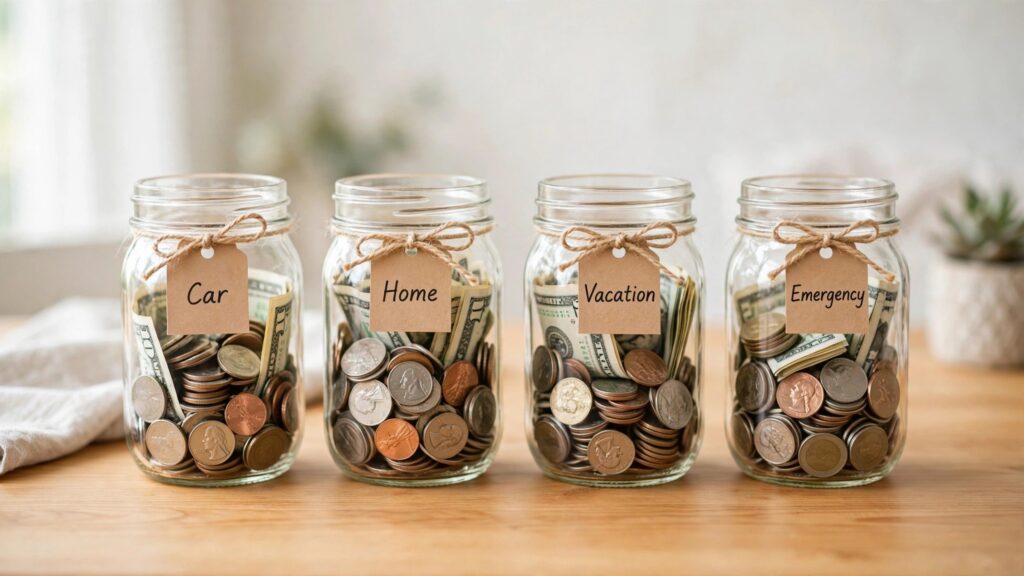
A sinking fund is simply money set aside gradually, ahead of time, for a specific expense you know is coming, even if you don’t know the exact date it will actually arrive. Car repairs, holiday gifts, annual insurance premiums, birthday celebrations, these are all genuinely predictable expenses that somehow still manage to feel like unwelcome surprises when they arrive, purely because most people don’t plan for them the way a dedicated sinking fund allows.
How a Sinking Fund Differs From an Emergency Fund
An emergency fund covers genuinely unpredictable events, a job loss, an unexpected medical bill, a sudden major repair. A sinking fund covers expenses you can actually predict, even if you don’t know the precise date or exact amount in advance. Car maintenance will happen eventually. Holiday spending arrives every single year on a known schedule. Insurance premiums renew on a predictable annual or semi-annual cycle. None of these are true emergencies, yet without a dedicated sinking fund, they often get treated like one, financed reactively through debt or by draining an emergency fund that was meant for a genuinely different purpose entirely.
Why Irregular Expenses Wreck an Otherwise Solid Budget
A monthly budget built purely around regular, recurring bills, rent, utilities, groceries, looks perfectly balanced right up until an annual expense arrives and blows a hole straight through it. Without planning ahead specifically for these irregular costs, they show up as unwelcome surprises that force either new debt or an uncomfortable scramble to free up cash on short notice, even though the expense itself was entirely predictable well in advance, sometimes down to the exact month it would occur.
How to Actually Set Up a Sinking Fund
Identify your irregular but predictable expenses over a full calendar year, car maintenance, gifts, annual subscriptions, insurance premiums, travel, and estimate a reasonable annual total for each specific category based on past spending. Divide each annual total by twelve to get the monthly amount you need to set aside, and transfer that amount automatically into a dedicated savings account each month, ideally one separate from both your regular checking account and your emergency fund, to avoid the temptation of quietly blending these different purposes together over time.
Should You Use One Fund or Multiple Separate Funds
Some people prefer a single sinking fund account covering every irregular expense category combined, tracked with a simple spreadsheet noting how much of the total balance is earmarked for each specific purpose. Others prefer entirely separate accounts or sub-accounts for each category, gifts, car maintenance, travel, kept fully distinct from one another. Many banks now offer easy-to-create sub-savings accounts specifically designed for this kind of categorized saving, which can simplify tracking considerably compared to a single combined balance requiring manual mental accounting to know how much is really available for any one specific purpose.
A Practical Example of Setting Up Multiple Sinking Funds
Someone estimates $600 a year for car maintenance, $500 for holiday gifts, and $900 for an annual insurance premium, totaling $2,000 across all three categories combined. Dividing by twelve gives a required monthly contribution of about $167 spread across the three funds. Automating this transfer on payday means that when the insurance premium comes due in month nine, or the car needs an unexpected but routine repair in month five, the money is already sitting there waiting, entirely separate from checking account cash flow and untouched by whatever else happened to be going on financially that particular month.
How Sinking Funds Fit Into a Broader Budget Framework
Within a structured approach like the 50/30/20 framework, sinking fund contributions typically fall under the needs category if they cover essential expenses like insurance, or the wants category if they cover discretionary spending like holiday gifts or vacations, depending on the specific nature of each individual fund. Either way, incorporating them explicitly into whichever overall budgeting system you’re using prevents these predictable expenses from becoming the kind of unplanned drain that quietly derails an otherwise well-structured, carefully considered budget.
Adjusting Sinking Fund Targets Over Time
Annual costs shift, insurance premiums rise, gift-giving habits change, car maintenance needs vary depending on a vehicle’s age and condition. Reviewing your sinking fund targets once a year, ideally right before setting a new annual budget, keeps the monthly contribution amounts realistic rather than based on outdated estimates from several years earlier that may no longer reflect actual current costs in any of these specific categories.
What Happens When a Sinking Fund Isn’t Quite Enough
Even careful estimates occasionally fall short, a repair costs more than expected, or an emergency travel need adds an unplanned expense to what was meant to be a modest, predictable annual travel fund. When this happens, covering the shortfall from general savings or briefly, deliberately, from your emergency fund is a far better outcome than turning to high-interest debt, and it’s worth treating any shortfall as useful information for adjusting next year’s specific target upward rather than as evidence the whole sinking fund approach somehow failed.
The Psychological Benefit Beyond the Purely Financial One
Beyond the practical benefit of having funds actually ready when a predictable expense arrives, sinking funds also reduce the low-grade anxiety that comes with vaguely knowing something expensive is coming without having planned for it concretely. Knowing the money is already set aside and earmarked removes a recurring source of financial stress that otherwise resurfaces every single time one of these predictable expenses approaches on the calendar.
Sinking Funds for Big, Multi-Year Purchases
Beyond annual recurring expenses, sinking funds also work well for larger, multi-year purchase goals, a home down payment, a car replacement, a significant home renovation, that don’t fit neatly into a single year’s budget cycle. The mechanics stay identical, estimate the total cost, divide by the number of months until you need the funds, and automate the monthly contribution, just stretched across a longer timeline than a typical annual sinking fund would require. This overlaps considerably with the broader practice of setting specific financial goals, since a well-structured sinking fund is really just a goal with a known, or reasonably estimated, target date and amount already attached to it.
Automating Sinking Funds Without Constant Manual Adjustment
Many banking apps and budgeting tools now support automatic recurring transfers split across multiple named sub-goals or virtual envelopes, removing the need to manually calculate and transfer to several individual accounts each month. Setting this up once, during your initial annual budget review, means the system runs quietly in the background for the rest of the year without requiring ongoing manual attention, freeing up the mental energy that manual tracking would otherwise demand every single month.
Common Categories People Overlook When Setting Up Sinking Funds
Beyond the obvious categories like car maintenance and holiday gifts, several less commonly considered expenses fit sinking funds particularly well. Pet care costs, including routine vet visits and the occasional unexpected but not quite emergency-level treatment, follow a fairly predictable annual pattern once you’ve owned a pet for a year or two. Home maintenance items, gutter cleaning, HVAC servicing, appliance replacement, follow their own predictable cycles tied to the age and condition of the specific systems in your home. Professional expenses, licensing renewals, continuing education costs, or membership dues, also tend to recur on a known annual or multi-year schedule that a dedicated sinking fund handles far more gracefully than treating each one as a surprise when it arrives.
How Sinking Funds Interact With Net Worth Tracking
Money sitting in a sinking fund still counts as an asset when calculating your overall net worth, but it’s worth mentally earmarking it as already spoken for rather than treating it as fully available discretionary savings when reviewing your broader financial position. Confusing a sinking fund balance with genuinely free savings can lead to overestimating how much flexibility you actually have on hand, particularly right before a known expense is about to draw that specific balance back down to zero or close to it.
Deciding Between a High-Yield Account and a Simple Envelope System
While a dedicated high-yield savings account is generally the better home for sinking funds given the modest interest it earns while the money sits waiting, some people genuinely prefer a more tactile, visual system, physical envelopes of cash labeled for each category, particularly for smaller, more frequent categories like groceries or entertainment budgeting layered on top of the core sinking fund concept. Either approach works as long as the underlying discipline of setting money aside before it’s needed, rather than scrambling once the expense actually arrives, stays consistent regardless of which specific tool or system you personally find easiest to maintain over time.
The Bottom Line
Sinking funds turn predictable but irregular expenses into planned, manageable line items rather than recurring unwelcome surprises that derail an otherwise solid budget. Identifying your specific irregular expenses, calculating a realistic monthly contribution, and automating the transfer removes both the financial and the psychological stress that these entirely foreseeable costs otherwise create year after year.