Compound interest gets called the eighth wonder of the world often enough that the phrase has become a cliché, but clichés sometimes earn their status honestly, and this is genuinely one of those cases. Understanding exactly how compounding works, and just how much time matters to the equation, changes how a lot of people think about saving and investing decades before retirement ever enters the conversation.
The Basic Mechanics of Compounding
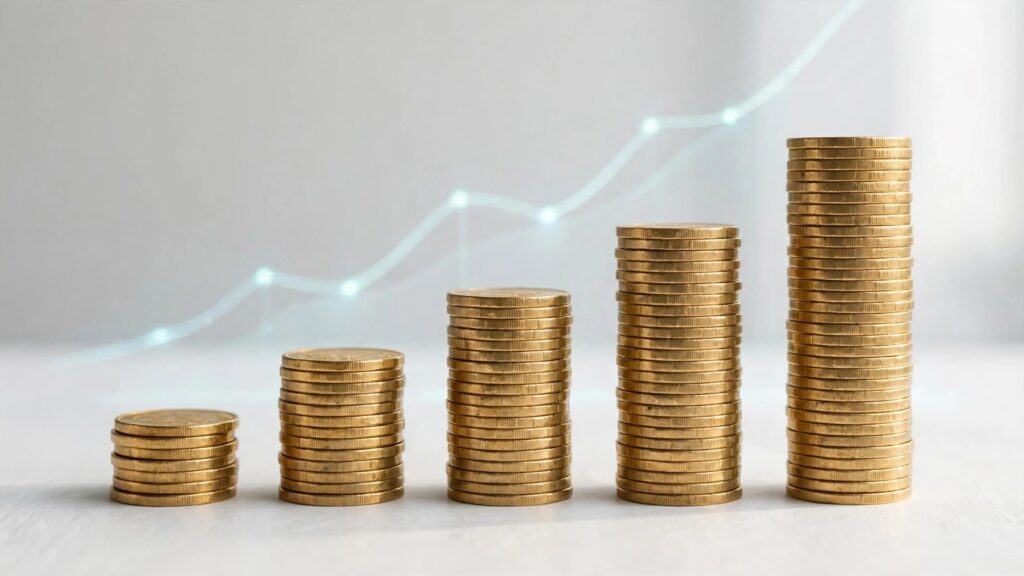
Simple interest pays a return only on your original principal, the same dollar amount, year after year. Compound interest pays a return on your principal plus all the previously accumulated interest, meaning your money earns returns on its own returns, creating a snowball effect that accelerates the longer it continues uninterrupted. A dollar earning 7 percent annually isn’t just growing by seven cents a year forever, each year’s growth builds on a slightly larger base than the year before, and that difference becomes dramatic over long stretches of time.
Why Time Matters More Than the Amount You Start With
This is the single most important and most counterintuitive lesson about compounding. Someone who invests a modest amount starting in their twenties can end up with more money at retirement than someone who invests considerably more starting in their forties, purely because of the additional decades of compounding the earlier investor benefited from. The earlier investor’s money had more time to snowball, and no later, larger contribution can fully make up for those lost early years of compounding, no matter how much extra is eventually contributed to compensate.
A Concrete Illustration
Consider someone who invests $200 a month starting at age 25 and stops entirely at age 35, letting the balance simply sit and grow untouched until age 65. Compare that to someone who starts at age 35 and contributes the same $200 a month every single year until age 65. Assuming a reasonable average annual return, the person who started at 25 and stopped after just ten years of contributions often ends up with a larger balance at retirement than the person who contributed for three full decades but started ten years later. The first ten years of compounding turn out to matter more than the following twenty years of continued contributions, which is a genuinely startling result the first time you actually see the math laid out.
How Compounding Frequency Affects Growth
Interest can compound annually, monthly, daily, or at other intervals, and more frequent compounding produces slightly higher effective returns even at the same stated annual rate, since interest gets added to the principal more often, giving it more opportunities to itself start earning returns sooner. This effect is generally modest compared to the impact of time and contribution amount, but it’s part of why comparing the annual percentage yield, which accounts for compounding frequency, gives a more accurate comparison between accounts than comparing stated interest rates alone.
Compounding Works Against You With Debt Too
The same mechanic that builds wealth when you’re saving works in reverse when you’re carrying debt, particularly high-interest debt like credit card balances. Unpaid interest gets added to your principal, and future interest charges then accrue on that larger balance, which is exactly why credit card debt can spiral so quickly if only minimum payments are made month after month. Understanding compounding cuts both ways, it’s the same force whether it’s growing your retirement account or growing a debt balance you’re struggling to pay down.
The Rule of 72 as a Quick Mental Shortcut
A simple way to estimate how long it takes an investment to double is dividing 72 by the annual interest rate. At a 6 percent annual return, money doubles roughly every 12 years. At a 9 percent return, it doubles closer to every 8 years. This rough shortcut won’t give you a precise figure, but it’s a genuinely useful mental tool for quickly grasping how different rates of return translate into real doubling timelines without needing a calculator or spreadsheet on hand.
Why Starting Now Beats Waiting for the Perfect Moment
Waiting until you earn more, until debt is fully paid off, or until you feel like you’ve built enough general financial knowledge to invest confidently all delay the start of compounding, and that delay is genuinely costly given how much early years matter to the eventual outcome. Starting with a small, imperfect amount today generally beats waiting for ideal circumstances that may take years to materialize, or may never fully arrive at all, given how personal finances tend to always feel slightly unsettled no matter your income level.
How This Applies Beyond Retirement Accounts
Compounding applies to any interest-bearing account, a high-yield savings account building toward a specific goal, a taxable brokerage account, or even reinvested dividends from stock holdings. The core principle, letting returns generate their own additional returns over time rather than withdrawing them, remains the same across every one of these different contexts, even though retirement accounts tend to get the most attention specifically because of the multi-decade time horizons involved.
A Practical Takeaway Worth Acting On
If you haven’t started investing or saving toward a long-term goal yet, the actual amount you start with matters far less than simply starting now rather than continuing to wait. Even a modest, automatic monthly contribution, increased gradually as your income allows, captures years of compounding that a larger but delayed contribution can never fully recover, no matter how much bigger that later contribution eventually becomes.
Why Market Volatility Doesn’t Erase the Case for Compounding
Investment returns don’t arrive as a smooth, predictable annual percentage in reality, they fluctuate considerably year to year, with genuine losses in some years and outsized gains in others. This volatility sometimes leads people to conclude that compounding math is more theoretical than practical, but the long-term averages used in these illustrations already account for a realistic mix of good and bad years across historical market data. What compounding requires isn’t a smooth ride, it’s simply staying invested through the full cycle rather than pulling money out during a downturn and missing the recovery that historically follows, which is exactly when a lot of the long-term compounding benefit actually gets captured.
How Fees Quietly Undermine Compounding Over Time
An account charging even a seemingly small annual fee, one or two percent, compounds that cost the same way it compounds returns, meaning a fee that looks trivial in a single year can meaningfully erode total growth across several decades. This is exactly why comparing the expense ratios of investment funds matters as much as comparing their historical returns, since a fund with slightly lower returns but meaningfully lower fees can genuinely outperform a higher-return, higher-fee alternative once decades of compounding are factored into both sides of the comparison.
How Compounding Connects to Your Broader Net Worth Picture
Watching compounding actually happen over years is one of the more motivating parts of tracking your overall net worth over time, since the growth in later years visibly outpaces the growth in earlier years even without any change in your contribution habits, a direct, visible demonstration of the snowball effect rather than an abstract concept read about in an article. This is part of why financial advisors often recommend tracking net worth annually rather than obsessing over daily account balances, since the meaningful compounding story only really becomes visible across a longer timeframe.
Explaining Compounding to Someone Just Getting Started
If the math still feels abstract, a simple analogy sometimes helps more than another set of numbers. Picture rolling a small snowball down a long, snow-covered hill. At the top, it barely picks up any extra snow with each rotation. Partway down, it’s noticeably bigger and picking up snow faster with every turn. Near the bottom, it’s massive and growing at a pace that would have seemed impossible looking at the small ball you started with at the top. Your money behaves the same way, slow and unremarkable in the early years, then visibly accelerating as the base it’s compounding against grows larger with each passing year.
Why This Matters Even If Retirement Feels Impossibly Far Away
It’s genuinely difficult to feel motivated about a retirement account when retirement itself is three or four decades away, and this psychological distance is a large part of why so many people delay starting despite intellectually understanding the math. Reframing the decision away from retirement specifically, and toward simply capturing years of compounding you can never get back, sometimes makes the choice feel more urgent and concrete than an abstract goal sitting decades in the future ever manages to on its own.
The Bottom Line
Compound interest rewards time more than almost any other single factor in personal finance, which makes starting early one of the highest-leverage financial decisions available to anyone, regardless of how much they’re able to contribute at the outset. The version of this lesson that actually changes behavior isn’t abstract math, it’s recognizing that the cost of waiting another year to start is measured in decades of lost compounding down the road, not just the months actually delayed.