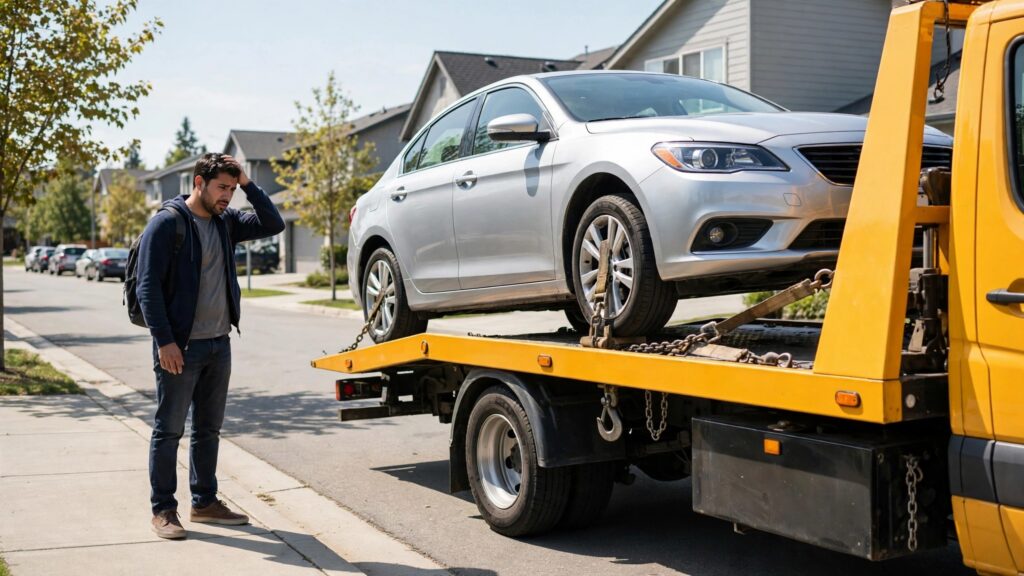
Falling behind on a car payment is stressful enough without also being unsure what actually happens next, and that uncertainty itself often makes an already difficult situation feel considerably more overwhelming than it needs to. Understanding the real sequence of events, from a first missed payment through to a potential repossession, makes it considerably easier to act early and protect yourself rather than freezing up during an already difficult financial stretch.
What Counts as Default on an Auto Loan
Default generally occurs after a payment is missed and remains unpaid beyond the grace period specified in your loan agreement, often 10 to 15 days, though the exact terms vary by lender and are spelled out in your original loan contract. A single late payment doesn’t necessarily mean immediate default, but a pattern of missed or consistently late payments moves you toward this more serious status considerably faster than an isolated, quickly resolved slip.
The First Signs of Trouble Lenders Typically Respond To
Most lenders begin reaching out shortly after a payment is missed, through calls, emails, or letters, initially just as a reminder rather than a serious threat. Responding to this early outreach, even just to explain a temporary hardship and discuss options, generally leads to a considerably better outcome than avoiding the lender’s calls, since lenders often have more flexibility to work with borrowers who communicate proactively than those who go silent.
How Late Payments Affect Your Credit
Payments generally get reported as late to credit bureaus once they’re 30 days past due, with additional negative reporting at 60 and 90-day marks if the situation isn’t resolved. Each of these reporting milestones does increasing damage to your credit score, making early intervention, before a payment crosses that critical 30-day threshold, considerably more valuable than waiting until the situation has already begun affecting your credit profile formally.
When Repossession Becomes a Real Risk
Repossession timelines vary by state and lender, but many lenders can legally repossess a vehicle after just one missed payment, though in practice most wait until a borrower is meaningfully behind, often 60 to 90 days, before actually initiating repossession. Some states allow repossession without any advance notice or court order, since the vehicle itself serves as collateral for the loan, making this a genuinely faster process than many borrowers expect compared to other forms of debt collection.
What Happens During an Actual Repossession
Repossession agents can typically take a vehicle from a driveway or a public location without needing to enter a closed garage or private structure, and in most states, they’re not required to provide advance warning of the specific date. Personal belongings left inside the vehicle are generally required to be returned, though the process for reclaiming them varies by lender and state, sometimes requiring a formal request within a specific window after the repossession occurs.
What Happens After Repossession
The lender typically sells the repossessed vehicle, often at auction, and applies the proceeds toward your remaining loan balance. If the sale price doesn’t cover what you still owed, plus any repossession and sale-related fees, you remain responsible for this deficiency balance, meaning repossession doesn’t actually eliminate your debt, it simply removes the vehicle while the financial obligation continues in a reduced but still very real form.
How Gap Insurance Interacts With This Situation
It’s worth noting that gap insurance covers the difference between a vehicle’s value and your loan balance specifically in the case of a covered total loss, an accident or theft, not in the case of voluntary or involuntary repossession due to non-payment. This is an important distinction, since gap insurance provides no protection at all against a deficiency balance resulting from repossession, which is an entirely separate scenario from the total loss situations gap coverage is actually designed to address.
Options Before Default Becomes Unavoidable
Contacting your lender proactively at the first sign of financial trouble often opens up options like a temporary payment deferment, a modified payment plan, or in some cases a loan modification extending the term to lower the monthly payment going forward. Voluntary surrender, returning the vehicle to the lender before a formal repossession, is another option that, while still damaging to credit, is sometimes viewed slightly more favorably than an involuntary repossession and can avoid certain repossession-specific fees.
How Long the Credit Damage From Default Actually Lasts
A repossession or default generally remains on your credit report for up to seven years from the original date of the missed payment that led to the default, continuing to affect your credit score, though its negative impact does lessen over time as the event moves further into the past relative to your more recent credit activity. Rebuilding credit after this kind of event is genuinely possible, but it requires sustained, consistent positive payment behavior over a meaningful stretch of time afterward.
A Realistic Example
Someone experiences a job loss and misses two consecutive car payments. Rather than avoiding their lender’s calls, they reach out directly, explain the situation, and negotiate a temporary three-month deferment while they search for new employment. This proactive approach avoids repossession entirely and, while the missed payments still show some impact, the borrower emerges from the situation with their vehicle intact and a considerably less damaged credit profile than they would have faced through avoidance and eventual repossession.
How Defaulting Affects Your Ability to Finance a Future Vehicle
Beyond the immediate credit score damage, a repossession or default makes future auto financing considerably more difficult and expensive for years afterward, since lenders view this history as a strong indicator of elevated risk. Borrowers rebuilding after a default often find themselves limited to subprime lenders charging meaningfully higher rates, similar to the dynamics covered when discussing how credit affects new versus used financing options, except starting from a considerably weaker position than a borrower who simply has a thin credit history rather than an actual default on record.
State-Specific Protections Worth Knowing About
Some states offer specific borrower protections around repossession, including required notice periods before a sale, a right to reinstate the loan by paying the overdue amount plus fees within a certain window, or restrictions on how repossession agents can legally recover a vehicle. These protections vary considerably by state, so it’s worth researching your specific state’s rules directly, or consulting with a local consumer protection agency or legal aid organization, rather than assuming the general process described here applies identically everywhere.
Bankruptcy as a Last-Resort Consideration
In severe financial situations, some borrowers facing an auto loan default alongside other overwhelming debt consider bankruptcy, which can temporarily halt repossession proceedings through an automatic stay, though the vehicle can still ultimately be repossessed if payments aren’t resumed or a bankruptcy plan doesn’t adequately address the auto loan specifically. This is a significant, complex decision with consequences extending well beyond the auto loan itself, and it’s worth consulting a qualified bankruptcy attorney rather than treating it as a simple form to file when a car payment specifically becomes unmanageable.
Rebuilding After Repossession Once the Immediate Crisis Passes
Once the immediate financial crisis that led to a default has passed, rebuilding credit follows the same fundamental principles as building credit from any setback, consistent on-time payments on remaining or new obligations, low utilization on any revolving credit, and patience over the months and years it takes for the negative mark to age and lose its weight relative to more recent, positive credit activity. Some borrowers use a shorter-term, smaller loan on a modest vehicle as a deliberate rebuilding step, prioritizing a clean, fully completed payment history on a manageable loan over financing a more expensive vehicle prematurely, before their credit has had genuine time to recover.
Why Communication With Your Lender Matters More Than People Assume
A lot of borrowers avoid their lender’s calls out of embarrassment or a mistaken belief that ignoring the problem somehow makes it less real, when in reality lenders generally have far more flexibility to help before an account reaches default than after. Loan servicing departments handle financial hardship conversations regularly, and reaching out proactively, even before missing a payment if you can see trouble coming, often opens doors to solutions that simply aren’t available once an account has already progressed deep into delinquency.
Keeping Records Throughout Any Hardship Conversation
If you do reach an agreement with your lender, a deferment, a modified payment plan, or any other accommodation, get the specific terms in writing rather than relying purely on a verbal phone conversation. Servicing departments handle enormous call volumes, and having documented confirmation of exactly what was agreed protects you if a miscommunication or a change in staff on the lender’s side leads to confusion later about what was actually promised or arranged during your original conversation.
The Bottom Line
Default and repossession are genuinely serious consequences, but they’re rarely instantaneous, and the window between a first missed payment and an actual repossession usually offers real opportunities to intervene if you act early and communicate directly with your lender. Avoiding the situation out of stress or embarrassment tends to produce the worst possible outcome, while proactive, early communication frequently opens doors to solutions that protect both your vehicle and your credit far better than silence ever would.


