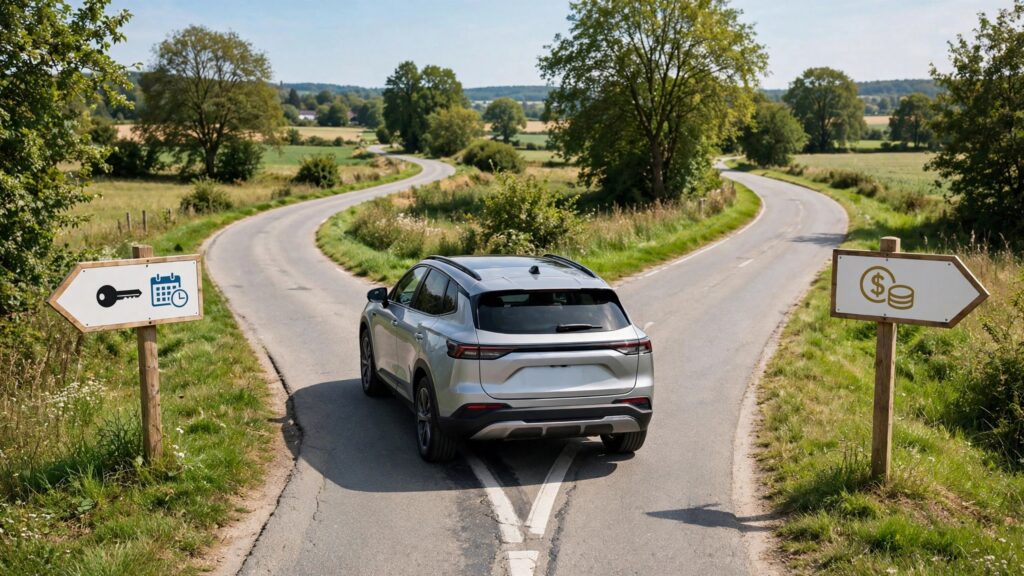
Leasing and financing solve the same basic need, getting into a vehicle, through fundamentally different structures with different trade-offs attached. Neither is universally better, and the right choice depends heavily on how you actually drive, how long you keep vehicles, and what you personally value in the arrangement.
How Financing Actually Works
Financing means taking out a loan to purchase the vehicle outright, building equity with every payment until the loan is paid off and you own the car free and clear. Once the loan is satisfied, you can keep driving the vehicle without any further payments, sell it, or trade it in, with the full remaining value belonging entirely to you.
How Leasing Actually Works
Leasing is essentially a long-term rental, where your monthly payment covers the vehicle’s expected depreciation over the lease term plus interest charges, rather than the full purchase price. At the end of the lease, typically two to four years, you return the vehicle, unless you choose to purchase it at a predetermined price, and simply walk away without ever having built any ownership equity in it.
Why Lease Payments Are Often Lower Than Loan Payments
Since a lease payment only covers the vehicle’s depreciation during your specific lease term rather than its full value, monthly lease payments are typically lower than financing payments for a comparable vehicle over a similar term. This lower payment is one of leasing’s primary appeals, particularly for buyers who prioritize driving a newer vehicle or a higher trim level than they could otherwise comfortably afford through financing.
The Mileage Restrictions That Come With Leasing
Most leases cap annual mileage, commonly somewhere between 10,000 and 15,000 miles a year, with penalty fees charged per mile over that limit at the end of the lease. This makes leasing a poor fit for high-mileage drivers, long commuters, frequent road-trippers, or anyone whose driving patterns are genuinely unpredictable from year to year, since exceeding the mileage allowance can add a meaningful, unplanned cost at lease-end that erodes much of the lower monthly payment’s apparent savings.
Wear and Tear Charges at Lease End
Leasing companies inspect returned vehicles for damage beyond normal wear and tear, charging for anything from minor dents to excessive interior wear that falls outside their specific guidelines. This adds an element of ongoing vigilance throughout the lease term that simply doesn’t apply to a financed vehicle you own outright, where cosmetic condition only matters if and when you eventually decide to sell or trade it in on your own terms.
Long-Term Cost Comparison
Financing typically costs less over a long time horizon, since once the loan is paid off, you’re driving without any further payments, sometimes for many years, while a lease requires either returning the vehicle and starting an entirely new lease, or purchasing the leased vehicle outright. Someone who keeps vehicles for many years after paying them off generally comes out ahead financially with financing, while someone who prefers driving a new vehicle every few years without ever wanting to deal with resale often finds leasing’s structure genuinely better suited to that specific preference.
How Down Payments Work Differently Between the Two
Both leasing and financing typically involve some upfront payment, though the way it’s applied differs. On a financed vehicle, a larger down payment directly reduces your loan balance and improves your loan-to-value position from day one. On a lease, an upfront payment, sometimes called a capitalized cost reduction, lowers your monthly payment but doesn’t build any equity, since you never actually own the vehicle at any point during a standard lease arrangement.
Credit Requirements for Leasing Versus Financing
Leasing companies often have somewhat stricter credit requirements than auto lenders financing a purchase, since the leasing company retains ownership and bears the risk of the vehicle’s resale value at lease-end, making them more selective about approving less creditworthy applicants. Your credit score affects the terms of both options, but a marginal credit profile might find financing more accessible than leasing, particularly for buyers just starting to establish or rebuild their credit history.
Business Use Considerations
Leasing sometimes offers tax advantages for vehicles used substantially for business purposes, since lease payments may be deductible as a business expense under certain circumstances, though the specific rules are genuinely complex and vary based on the percentage of business use and current tax regulations. Anyone considering a lease primarily for business use reasons should consult with a tax professional rather than assuming a general rule of thumb applies cleanly to their specific situation.
A Practical Way to Decide
Ask yourself honestly how long you typically keep vehicles, whether your annual mileage is predictable and reasonably low, and whether you value driving a newer vehicle more than building long-term equity. If you keep cars for many years past the loan payoff point and drive high mileage, financing usually wins financially. If you prefer newer vehicles every few years, drive predictable and moderate mileage, and don’t mind never building equity in exchange for lower payments and less long-term commitment, leasing may genuinely fit your preferences better despite the higher long-term cost.
Early Termination Costs on a Lease
Ending a lease before its term expires, whether due to a job relocation, a change in family needs, or simply wanting a different vehicle, typically comes with substantial early termination fees, since the leasing company structured its expected return around the full original term. This makes leasing considerably less flexible than financing if there’s a genuine chance your circumstances might change significantly during the lease period, since a financed vehicle can be sold or traded at any point without a comparable contractual penalty, even if the sale price doesn’t fully cover the remaining loan balance.
How Gap Coverage Applies Differently to Leases
Most leases automatically include gap coverage built into the lease agreement itself, protecting you if the vehicle is totaled or stolen during the lease term, since leasing companies want this protection baked in as standard practice rather than optional. Financed vehicles don’t come with this protection automatically, meaning buyers financing a purchase, particularly with a small down payment, need to actively decide whether to purchase gap coverage separately, an important difference worth understanding when comparing the true all-in cost and protection level of each option.
How Loan Term Choice Interacts With a Financing Decision
If you decide financing is the right path, you’ll still face a choice around loan term length, which affects both your monthly payment and how quickly you build genuine equity compared to the vehicle’s depreciation. This decision doesn’t arise at all with a standard lease, since lease terms are generally shorter and more standardized, another structural difference worth weighing alongside the core lease versus finance decision itself.
What Happens to Excess Wear Charges If You Buy Out a Lease
Some lessees choose to purchase their leased vehicle at the end of the term rather than returning it, particularly if they’ve grown attached to the car or if the buyout price looks favorable relative to current market value for a comparable used vehicle. In this scenario, wear and tear charges that would otherwise apply upon return typically don’t apply, since you’re converting the lease into a purchase rather than handing the vehicle back, which can make a lease-to-buy path attractive for someone who wasn’t fully certain at the outset whether they’d want to keep the vehicle long-term.
How Insurance Requirements Differ Between the Two
Leasing companies typically require higher minimum liability and comprehensive coverage limits than a lender financing a purchase might require, since the leasing company retains ownership and wants to ensure adequate protection on an asset they still technically own throughout the lease term. This can mean a somewhat higher insurance premium on a leased vehicle compared to financing an identical model with lower minimum coverage requirements, a cost worth factoring into the full comparison rather than looking only at the monthly lease or loan payment in isolation.
Considering Your Own Relationship With Vehicle Ownership
Beyond the pure financial comparison, it’s worth being honest about your own relationship with owning versus essentially renting a vehicle long-term. Some people feel genuine satisfaction in owning a paid-off car outright, free of any ongoing payment, while others place little value on that specific feeling and would rather always be driving something newer under warranty, never worrying about major repair costs as a vehicle ages. Neither preference is wrong, and acknowledging which one genuinely describes you helps cut through purely financial arguments that might otherwise point toward a technically cheaper option that doesn’t actually fit how you want to experience car ownership.
The Bottom Line
Leasing and financing aren’t a matter of one being objectively smarter than the other, they serve different priorities and driving patterns. Being honest about your actual habits, rather than assuming one option is universally the financially responsible choice, leads to a decision that genuinely fits your situation rather than one that looks correct on paper but doesn’t match how you actually use and think about vehicles.


