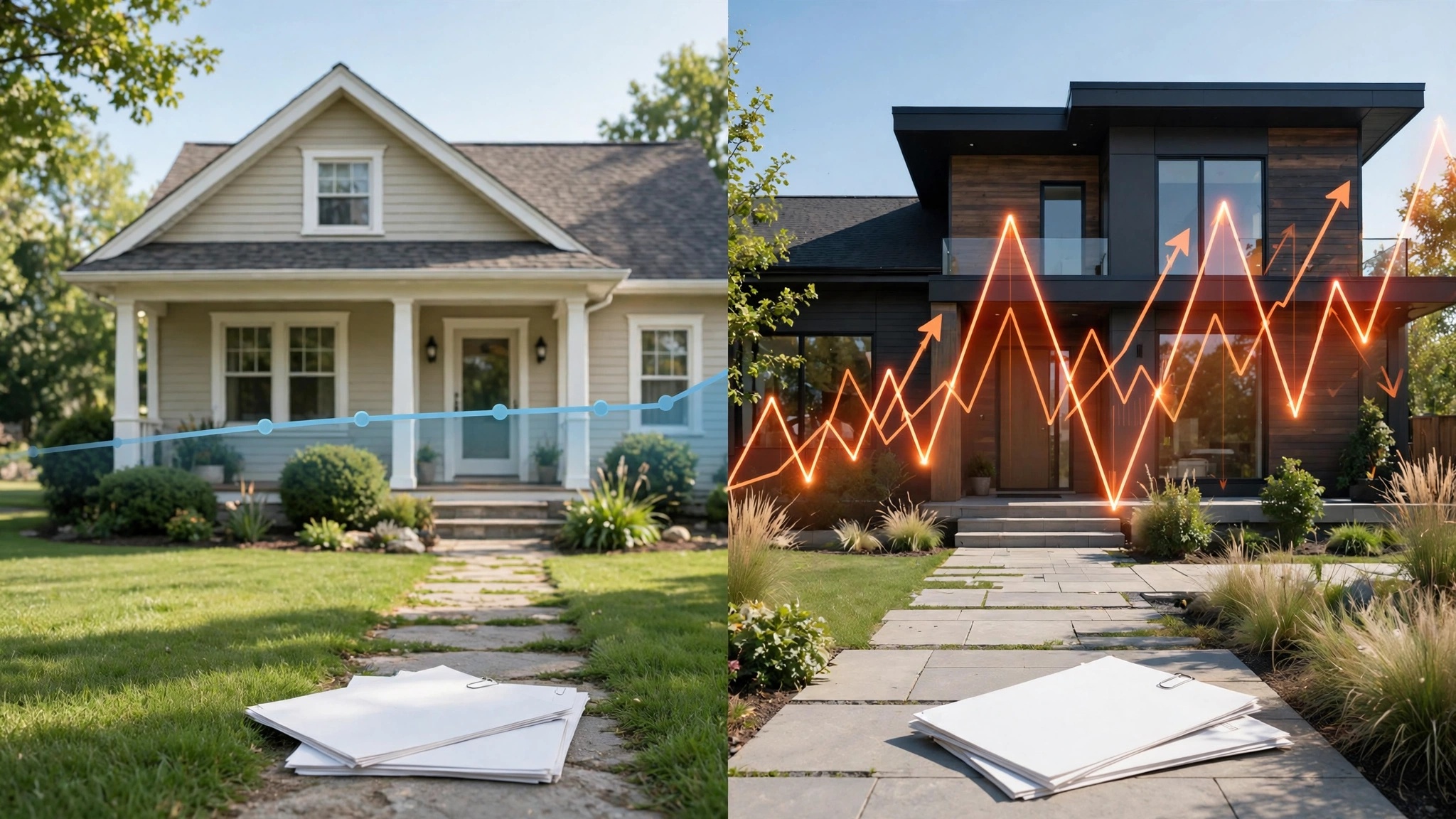
Lenders will happily tell you the maximum amount they’re willing to loan you. What you can actually afford without feeling financially squeezed every single month is often a very different number, and mixing up the two is one of the most common ways new homeowners end up house-poor within the first year of ownership.
The Number Lenders Actually Use to Approve You
Most conventional lenders cap your total debt-to-income ratio, meaning all your monthly debt payments including the new mortgage divided by your gross monthly income, at around 43 to 45 percent, though some specific loan programs stretch even higher for particularly well-qualified borrowers with strong credit and reserves. That figure represents the absolute ceiling a lender will approve you for. It is not necessarily a number that will leave you feeling comfortable month to month once you factor in everything else in your life.
A More Conservative Rule Worth Actually Following
The 28/36 guideline is considerably more cautious than what lenders will actually approve, and that’s exactly the point of using it as your own personal benchmark instead. The 28 percent piece states that your total housing costs, including principal, interest, property taxes, homeowners insurance, and any HOA fees, shouldn’t exceed 28 percent of your gross monthly income. The 36 percent piece extends that same logic to all your debt combined, including car payments, student loans, and credit cards. Following this more conservative guideline leaves genuine room for savings, retirement contributions, and the inevitable surprises that come with owning any home.
The Real Monthly Cost Goes Well Beyond the Mortgage Payment Itself
Property taxes vary widely by location and can be genuinely substantial depending on where exactly you live, sometimes rivaling the principal and interest portion of your payment in higher-tax areas. Homeowners insurance adds another layer, along with private mortgage insurance if your down payment falls under 20 percent. HOA fees apply if the property has them, and these can range from modest to genuinely significant depending on the amenities included. Ongoing maintenance is often estimated at somewhere between 1 and 2 percent of the home’s total value each year, covering everything from a leaking roof to a failing furnace. And utilities tend to run noticeably higher in an owned house than they typically did in a rental apartment, simply due to more square footage to heat and cool.
Don’t Forget Closing Costs and a Real Cash Cushion
Beyond the down payment itself, you’ll need to budget for closing costs, typically running 2 to 5 percent of the loan amount, plus some meaningful reserve for the first few unpredictable months of actual homeownership. Spending every last available dollar just to close on the home leaves absolutely nothing in reserve if the water heater fails in month two of living there, and somehow it always seems to be month two when these things happen.
A Simple Way to Test Your Budget Before You Actually Commit
Try genuinely living on your projected post-purchase budget for a couple of months while you’re still renting your current place. Set aside the difference between your current rent payment and your estimated future mortgage payment, including taxes, insurance, and estimated maintenance, into a completely separate savings account each month. If that arrangement turns out to be genuinely sustainable, even a little comfortable rather than a constant struggle, that’s real evidence you can actually afford the home. A lender’s approval letter alone doesn’t tell you that.
Your Actual Life Matters as Much as the Raw Math
Two households with completely identical income and debt levels can have very different comfortable price points depending on job stability, other pressing financial goals like retirement savings or a child’s future education, and how much financial risk each household is genuinely willing to carry. A lender’s approval reflects statistical risk from their perspective as a business. It says absolutely nothing about whether the resulting payment will actually feel manageable to you personally, month after month, year after year.
A Practical Example Worth Walking Through
Imagine a household earning $7,000 a month combined. A lender might approve them for a payment up to roughly $3,000 a month under the 43 percent DTI ceiling, once existing debts are factored in. But applying the more conservative 28 percent guideline instead suggests a housing payment closer to $1,960 a month is the more comfortable target. That gap, over a thousand dollars a month, represents the real difference between what a lender will hand you and what actually leaves room to save, travel occasionally, and handle a surprise expense without real financial stress.
Signs You’re About to Overextend Yourself
If you find yourself justifying a higher price point because rates might drop later and you can refinance, if you’re planning to stretch by cutting your emergency fund down to nearly nothing at closing, or if the only way the monthly numbers work is by assuming a raise or bonus that hasn’t actually happened yet, these are all warning signs worth taking seriously before signing anything.
Factoring in Your Loan Term Choice
How much home you can comfortably afford also depends on whether you’re leaning toward a 15-year or 30-year term, since the two produce very different monthly payments for the same loan amount. If you’re weighing 15-year versus 30-year options, it’s worth running your affordability calculation both ways before settling on a target price range, since a home that’s comfortably affordable on a 30-year term might feel considerably tighter on a 15-year one.
Revisiting Your Number as Your Life Changes
Affordability isn’t a one-time calculation you do before house hunting and then forget. A new baby on the way, a planned career change, or an aging parent who might need support all shift what a comfortable payment actually looks like, even if your current income hasn’t changed yet. It’s worth revisiting your comfortable price range any time a major life change is realistically on the horizon, rather than anchoring permanently to a number you calculated a year or two earlier under different circumstances.
How Dual Incomes Change the Calculation
Households relying on two incomes to qualify face a version of this decision that single-income buyers don’t have to weigh as heavily. If one income were to disappear temporarily, whether from a layoff, a health issue, or a planned career break, would the mortgage still be manageable on the remaining income alone. Some dual-income households deliberately choose a home priced comfortably within what one income alone could sustain, treating the second income as a buffer for savings and lifestyle rather than something the mortgage payment structurally depends on.
Regional Cost of Living Beyond the Mortgage Itself
Two identical mortgage payments can feel completely different depending on the broader cost of living in a specific area. A payment that leaves plenty of room in a lower-cost region might feel considerably tighter in an area with higher property taxes, higher insurance premiums due to regional risk factors, or a generally higher cost of everyday goods and services. It’s worth pressure-testing your comfortable price range against the actual local cost of living, not just the mortgage payment calculator’s output in isolation.
A Quick Gut Check Before You Start Touring Homes
Before you even schedule your first showing, write down your comfortable monthly number on paper, separate from anything a lender has quoted you. Refer back to that figure every time a listing tempts you above it. It’s remarkably easy to let a great kitchen or an extra bedroom quietly push your target upward during an active search, and having a written number to check against helps counter that pull in the moment.
The Bottom Line
Treat your maximum lender-approved amount as a ceiling, never as an actual target to aim for. Build your real, honest budget around something closer to the 28/36 guideline, account for the full true cost of owning a home well beyond principal and interest, and leave genuine room for the unexpected expenses that homeownership reliably brings. The house that quietly makes you house-poor rarely feels like the right decision a year later, no matter how much a lender was originally willing to hand you on paper.