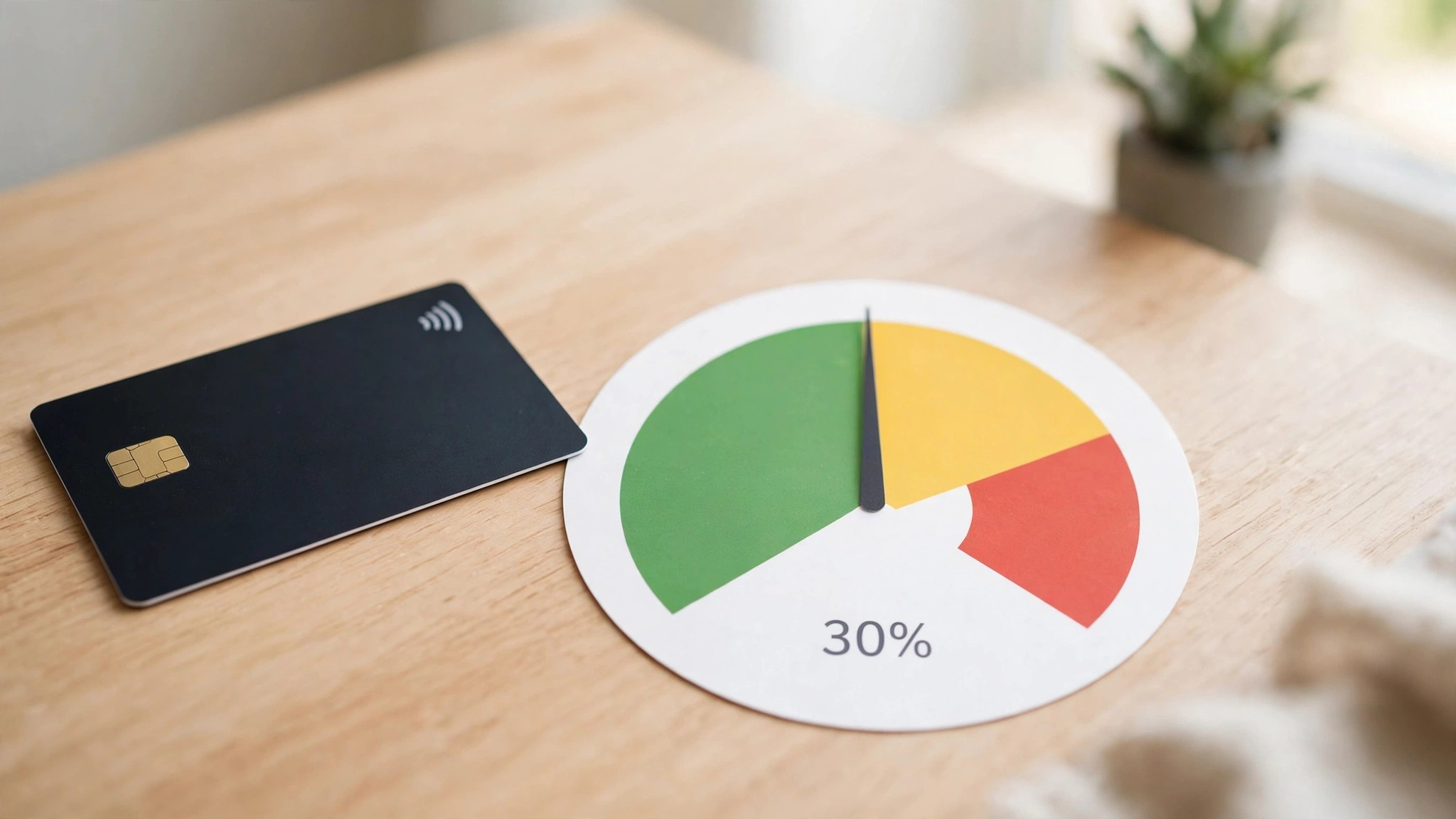
Credit card interest has a reputation for being confusing on purpose, and honestly, a lot of the terminology does seem designed to keep people from fully understanding what they’re actually paying. Once you break it down into its actual parts, though, it’s a lot more straightforward than the fine print on the back of a statement makes it look.
What APR Actually Means
APR stands for annual percentage rate, and it represents the yearly cost of borrowing on your card, expressed as a percentage. Most credit cards don’t charge interest annually though, they charge it daily, which is where a lot of the confusion starts. Your card issuer takes your APR, divides it by 365 to get a daily periodic rate, and applies that rate to your balance every single day it remains unpaid. This is why interest can add up faster than people expect, since it’s compounding daily rather than sitting still until a single annual calculation.
How the Grace Period Protects You
If you pay your statement balance in full by the due date every month, most cards charge you zero interest on purchases, thanks to what’s called a grace period. This is genuinely one of the most valuable features of a credit card, and it’s also the single most effective way to avoid interest charges entirely. The moment you carry a balance past the due date, though, the grace period typically disappears, and interest starts accruing on your purchases again, sometimes retroactively to the date of purchase depending on your card’s specific terms. If you want the mechanics of exactly how this cutoff works, it’s worth reading through how credit card grace periods actually work in more detail.
How Average Daily Balance Calculations Work
Most issuers calculate your interest charge using your average daily balance across the billing cycle, not just your balance on a single day. This means every purchase and every payment shifts your daily balance immediately, and the issuer adds up each day’s balance across the whole cycle, divides by the number of days, and applies your daily periodic rate to that average. A large purchase early in your billing cycle accrues more interest over the month than the same purchase made right before your statement closes, simply because it sits on your balance for more days.
Why Minimum Payments Are a Trap
Making only the minimum payment keeps your account in good standing, but it does almost nothing to actually pay down your balance, since the vast majority of that minimum payment often goes toward interest rather than principal, especially early on. A $5,000 balance at a typical credit card APR, paid only at the minimum each month, can take well over a decade to pay off and cost more in interest than the original purchases were worth. This is exactly why credit card statements are now required to show a comparison of how long it would take to pay off your balance at the minimum payment versus a larger fixed payment, a disclosure that’s worth actually reading rather than skipping past.
Fixed Versus Variable APR
Most credit cards today carry a variable APR, tied to a benchmark rate like the prime rate, meaning your interest rate can rise or fall over time as that benchmark moves, without the issuer needing to send a special notice for every small adjustment. Fixed-rate cards exist but are less common, and even a fixed rate can usually still be changed by the issuer with proper advance notice under most cardholder agreements, so fixed doesn’t always mean permanently locked in the way the word might suggest.
Penalty APRs and How They Get Triggered
Many cards include a penalty APR, a significantly higher interest rate that kicks in if you make a late payment, sometimes just one, depending on the card’s specific terms. This penalty rate can apply not just to new purchases but sometimes to your entire existing balance, and it can remain in effect for six months or longer even after you resume making payments on time. Reading your specific cardholder agreement for exactly when a penalty APR triggers, and how long it lasts, is worth doing before you ever miss a payment, not after.
How Multiple Interest Rates Can Apply to One Card
A single card can carry different APRs for different types of transactions simultaneously, one rate for purchases, a typically higher rate for cash advances, and potentially another rate entirely for a balance transfer. When you make a payment, issuers are required by law to apply it to the balance with the highest APR first, once you’ve paid at least the minimum, which works in your favor if you’re carrying multiple balance types, though it’s still far better to avoid carrying any balance at all whenever possible.
A Concrete Example Worth Walking Through
Say you carry a $2,000 balance at a typical card APR. If you pay only the minimum each month, a significant share of every payment goes toward interest rather than reducing your actual balance, meaning the debt lingers for years and the total interest paid can end up rivaling or exceeding the original $2,000. If instead you commit to a fixed payment well above the minimum, the balance clears in a fraction of the time and the total interest paid drops dramatically. This single decision, minimum payment versus a firm higher payment, is one of the most consequential choices a cardholder can make.
How to Avoid Interest Almost Entirely
Pay your full statement balance every single month, before the due date, without exception. Set up autopay for at least the full statement balance as a safety net against forgetting. And if you ever do carry a balance temporarily due to an emergency, prioritize paying it off as fast as your budget allows rather than letting it linger while continuing to make new purchases on the same card.
Why Carrying a Small Balance Doesn’t Help Your Credit
A persistent myth suggests that carrying a small balance month to month somehow helps your credit score, as if lenders reward you for paying interest. This isn’t true. Your credit score reflects that you have available credit and that you’re managing it responsibly, not that you’re actively paying interest charges to a card issuer. Paying your statement in full every month, resulting in a zero interest charge, has no negative effect on your score whatsoever, and believing otherwise has cost plenty of people unnecessary interest charges over the years based on a misunderstanding that simply won’t die.
How Introductory Zero Percent APR Offers Actually Work
Many cards advertise a promotional zero percent APR period, often lasting somewhere between six and 21 months, applying to either new purchases, balance transfers, or sometimes both. During this window, you genuinely pay no interest on the qualifying balance, which can be a legitimate tool for financing a large purchase or consolidating existing debt. The catch worth understanding clearly is what happens the moment that promotional period ends. Any remaining balance typically starts accruing interest at the card’s standard ongoing APR, and depending on the specific card’s terms, some issuers apply deferred interest, meaning if you haven’t paid off the entire balance by the end of the promotional period, you can be charged interest retroactively back to the original purchase date, not just going forward from that point.
Reading Your Statement to Understand Your Actual Rate
Every monthly statement includes a section breaking down exactly which APR applies to which portion of your balance, along with the actual interest charged that cycle. It’s worth actually reading this section occasionally rather than skipping straight to the total amount due, since it reveals whether you’re being charged the standard purchase rate, a higher penalty rate, or a cash advance rate on any portion of your balance, information that’s easy to miss if you only glance at the bottom line figure each month.
How This Connects to Your Broader Credit Picture
Interest charges themselves don’t directly appear on your credit report, but the balance they help create absolutely does, feeding directly into your credit utilization ratio, one of the more heavily weighted factors in your overall credit score. A cycle of carrying balances and accruing interest tends to keep utilization elevated month after month, which quietly drags down your score even if every payment is technically made on time. Breaking that cycle usually requires a deliberate push, whether that means a temporary period of stricter budgeting, a balance transfer to a lower rate, or simply committing to paying more than the minimum every month until the balance is genuinely gone rather than just managed.
The Bottom Line
Credit card interest isn’t inherently mysterious once you understand daily compounding, average daily balances, and how a grace period actually functions. The real lesson underneath all of it is simple even if the math looks complicated. Paying your balance in full every month turns a credit card into a genuinely useful tool. Carrying a balance turns the same card into one of the most expensive forms of debt available to an ordinary consumer.